
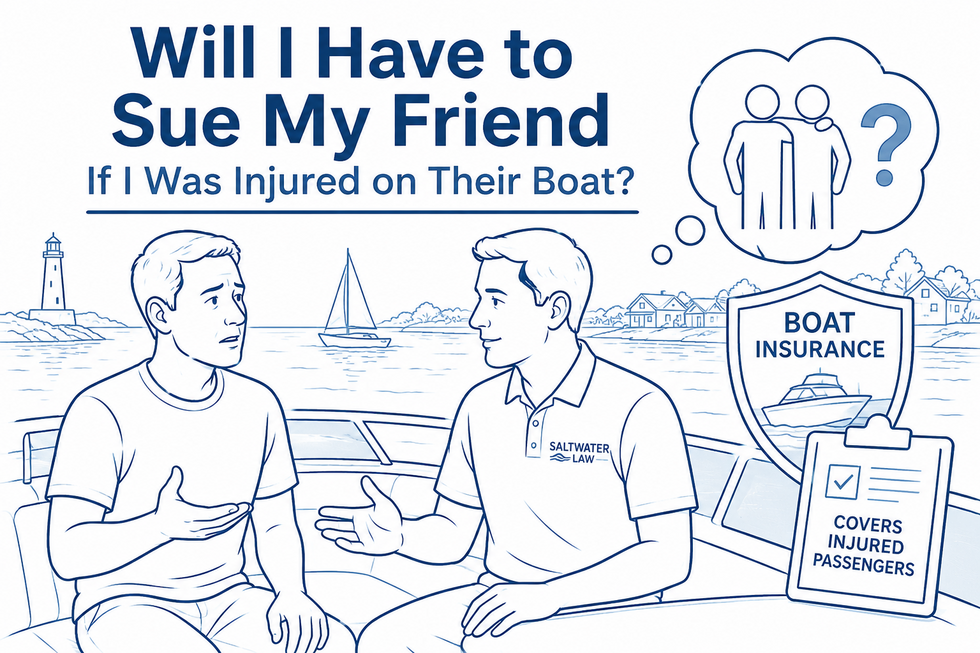
No — not necessarily. And even if it comes to that, you're not really suing your friend. You're making a boating accident claim against their boat insurance. In many cases, that's exactly what the boat owner expects the insurance to be used for. There's a big difference, and understanding it can help you navigate what to do next without guilt or confusion. A boating accident lawyer can help you understand whether and how a marine insurance policy will respond to your boat accident.
The Real Question Isn't About Your Friend — It's About Who Was Responsible
Most people hesitate to make a claim after being injured on a friend's boat because they feel like they're attacking the friendship. That's understandable. But here's the truth: if your friend was negligent — if they hit a large boat wake without warning passengers, drove recklessly, failed to maintain the boat, or weren't paying attention — that's not a personal attack. That's a failure to do what the law requires of a boat owner: operate safely and protect their passengers.
Under maritime law, a boat owner has a legal duty to you as a passenger. If they breach that duty and you get hurt, you have a claim. Period. It's no different than if your friend caused a car accident while you were in the car.
You're Not Going After Your Friend's Bank Account — You're Going After Insurance
This is where the anxiety usually ends. Your friend's boat insurance exists for exactly this reason. They paid for it specifically so that if something goes wrong on the boat, people who are injured get taken care of. When you make a claim, you're not asking your friend for money out of his pocket. You're triggering the insurance coverage he already bought.
The insurer investigates, adjusts the claim, and pays it (assuming liability is clear). That's how insurance works. Your friend doesn't personally write a check. The insurance company does. And that's why he carries the policy.
What If Your Friend Wasn't Even Driving?
Many boat accidents happen when the boat owner isn't at the helm. Your friend owns the boat, but someone else is driving it. In those situations, both the owner and the operator can be liable. The owner can be liable for negligently entrusting the boat to an unfit or reckless operator. The operator is liable for their own negligence — speeding, failing to keep a lookout, boating under the influence (BUI), hitting wakes without warning.
The boat's insurance policy covers both. And if the boat owner's insurance doesn't fully cover the claim, the operator's personal insurance or the operator themselves might be responsible for the rest. The point is: your claim is against the insurance, not against your friend personally.
Common Boat Accidents That Injure Passengers
Passenger injuries on boats come from collisions, groundings, wakes throwing people overboard, propeller strikes, falls on deck, and alcohol-fueled negligence. If alcohol was involved — if the operator had a BUI (boating under the influence) — the liability exposure increases significantly. A boat insurer knows that BUI cases are serious, and they take them seriously.
Can You Preserve the Friendship?
Yes. Making a claim through insurance isn't personal. It's business. The insurer will handle the investigation and adjustment. Your friend doesn't have to be involved in every step. You don't have to have difficult conversations about fault. You work with the insurance company and their adjusters. That's the whole point of having insurance.
That said: don't give the insurer a recorded statement without talking to a boat accident lawyer first. Don't accept a quick settlement offer. And don't let the insurer push you into thinking you're harming your friendship by protecting your own rights. You're not. You're doing what the law allows you to do.
What If There's No Insurance?
If the boat owner didn't carry liability insurance, you can make a direct claim against them. This can be riskier and more complicated, but it's still possible.
The Maritime Law Angle — Why Rhode Island Matters
Many boating accidents occurring on Rhode Island's navigable waters are governed by maritime law. Whether maritime law applies depends on the location and circumstances of the accident. That's federal law, and it has its own rules, deadlines, and protections. You need a maritime lawyer to navigate it — not a general-practice attorney, and not someone handling their first boat case.
The Bottom Line: Call a Lawyer Early
Don't sit on this. Maritime claims have hard deadlines. Talk to a boat accident lawyer early, understand your rights, and let them guide you through the process. You can preserve your friendship and still protect yourself.
Fulweiler llc
East Coast Maritime Injury Lawyers
1-800-383-MAYDAY (6293)

Comments
There are no comments for this post. Be the first and Add your Comment below.
Leave a Comment